

Boilers
Bromsgrove, Birmingham, Redditch, Solihull & Worcester
0800 050 2345

Professional Boiler Specialists, You Can Rely On
Boilers are located in the heart of your home’s central heating and hot water systems. If you have an operational boiler, your central heating will operate as it should, your radiators will be heated evenly, and your hot water will be consistent.
A Malfunctioning Boiler Can Negatively Affect Your Home's Overall Heating System
Complete heating provides professional gas boiler installation, boiler repairs and boiler servicing across the county of Worcestershire and surrounding areas in the Midlands. All gas boiler works are completed by a fully qualified Gas Safe Registered Engineer (No. 215453). This ensures that your heating system has been safely and legally installed.
We simplify the boiler purchase process by providing you with complete support throughout the entire process. From the purchase of a new boiler through to supporting a current boiler, along with information on replacing a boiler, we provide you with direct, reliable and honest assistance.
Call 0800 050 2345 or email john@complete-heating.co.uk to arrange a visit.
Complete Boiler Services
Our comprehensive boiler services will ensure that your central heating and hot water are functioning both safely and at maximum efficiency. Whether it is for the installation of a new boiler, repairs to your current boiler, or annual boiler maintenance, we are here to assist.
Boiler Installation
Professional boiler installation designed around your property, heating needs and long-term energy costs.
We assess:
- The size of your house and the available space
- Number and size of radiators
- Your central heating configuration
- Hot water use and multiple bathroom use, as well as the number of users
- Type of fuel and whether there is a gas supply to your home
- Condition of your current boiler
- Ventilation and fresh air requirements for safe boiler operation
Boiler Replacement
Upgrade your old, unreliable boiler with a modern, efficient replacement matched to your home and hot water demand.
A boiler replacement can help if you are experiencing:
- Frequent breakdowns and rising repair costs
- Higher energy bills from poor efficiency
- Inconsistent heating or hot water performance
- An ageing boiler nearing end of life
Boiler Repairs
The most common faults with Gas Boilers, Combi Boiler Systems and System Boilers include:
- No Heat/Hot Water
- Low Water Pressure
- Leaks From The Boiler
- Unusual Sounds
- Inconsistent Temperature
- Boiler Repeatedly Losing Pressure
If you see these signs in your boiler, you should get it checked as soon as possible.
→ View Boiler RepairsBoiler Servicing
Annual Boiler service shelters you from serious risks with your boiler and helps maintain efficiency by keeping it safe to use, and also ensures your warranty remains valid.
Most major Boiler manufacturers advocate an annual Boiler service. It's also important to get your boiler serviced regularly because it:
- Improves boiler efficiency
- Ensures safe gas operation
- Helps prevent carbon monoxide risk
- Identifies wear before breakdown
- Ensures the boiler is properly maintained
Regular servicing also helps ensure the boiler remains boiler safe and operating correctly while keeping the boiler warranty valid.
→ View Boiler ServicingEmergency Boiler Repair
If your heating and hot water fail unexpectedly, we provide prompt response across Worcestershire and the surrounding areas.

Types of Boilers Explained
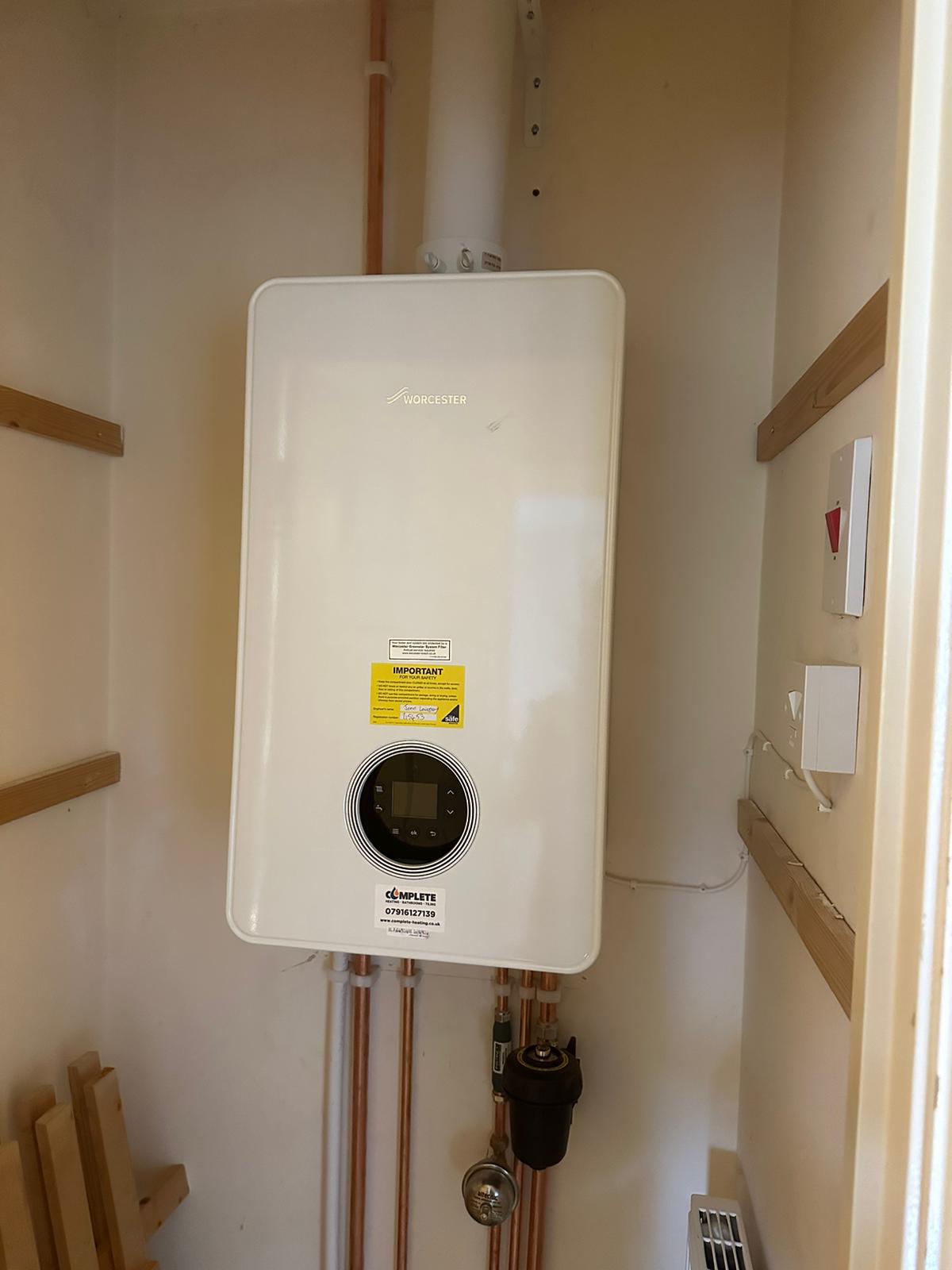
Boilers can be found in many shapes and sizes, as well as varying amounts of energy output, to fit a variety of home layouts in Great Britain. A home’s boiler is determined by how big your house is, what amount of hot water you need, what fuel you use for heat, and how much space you have for the boiler itself.
There are three major categories of residential boilers: Combi, System, and Conventional (heat only) boilers. Today, most new residential boilers will be highly efficient and will be condensing boilers.
Condensing Boilers are able to make use of a heat exchanger to capture heat from the boiler that would have been lost up the flue. This is the reason why most modern boilers can achieve efficiencies of more than 90%, compared to an older model, which could lose a lot of its heat energy.
System boilers use a method of heating by using radiators or Under Floor Pipes, and are very common in European Homes.
Combi Boiler
Combi boilers supply both heating and hot water from a single unit; therefore, there is no need for a separate cylinder to store the heated water.
The advantages of having a combination (combi) boiler include:
- Space-saving and compact in design
- Money saving
- Best suited for households that have few people
- The best option when space is at a premium
Combination (combi) boilers do not require separate hot water storage tanks, which saves space and can simplify installation.
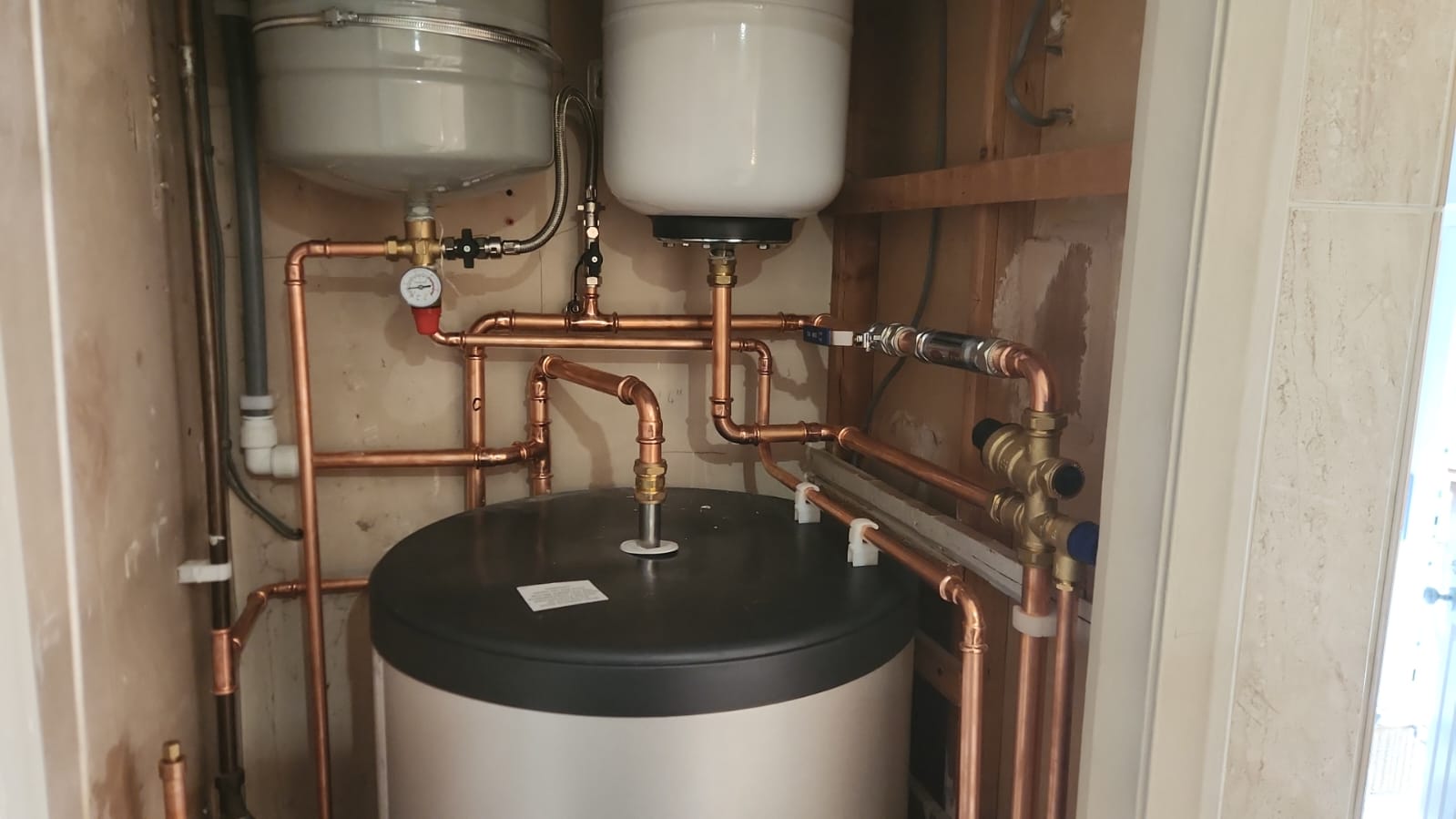
System Boilers
System boilers are very common for larger Homes. They are usually paired with a hot water cylinder and are perfect for:
- Multiple bathroom houses
- High demand for hotter water
- Larger families
- Any home where a higher heat output is required
System boilers store water in a cylinder for future use (allowing multiple taps to be used at the same time without causing loss of pressure). System boilers are often paired with an unvented hot water cylinder that can support greater performance of hot water in Homes where high demand exists.
Regular Boilers (Conventional Boilers)
Regular boilers – also known as conventional boilers or heat-only boilers – are often found in older houses and homes.
These types of boiler systems use:
- A hot water cylinder
- Cold water storage tanks
- Traditional heating system layout (often a cold water storage tank is located in the Loft)
Heat-only boilers work in a similar way to system boilers. Regular boilers are suitable where the same type of heating system already exists, and replacing like-for-like can sometimes reduce installation changes.
Electric Boilers
An electric boiler is an alternative to using a gas boiler. These units are ideal when there is no gas connection to the property or to the mains gas supply.
Generally, electric boilers are small and therefore take up less space. Additionally, electric boilers are also generally quiet. They can make great alternatives for flat dwellers and those living in small homes.
Costs associated with using electricity to power these boilers will generally be more expensive than using a gas fired boiler.
Oil Boilers
Oil boilers are often found in rural locations where there is no mains gas supply. They require on-site storage of oil and regular refills of the oil container.
LPG Boilers
LPG Boilers are an alternative for houses that do not have access to the mains gas supply. LPG Boilers function like a conventional gas boiler but require periodic refilling of the LPG storage tank.
Heat Pumps and Low Carbon Heating Systems
Some homeowners are exploring heat pumps as part of a low carbon heating system.
While boilers remain the most common heating solution across Great Britain, we are happy to discuss alternative options if appropriate for your property and usage.
Hydrogen-Ready Boilers
Some new boilers are described as hydrogen-ready.
These boilers can operate on natural gas now. They can be converted later if the gas grid transitions to hydrogen in the future.
Choosing the Right Boiler
When selecting the right boiler, there are several practical factors to consider:
- Property size
- Number of radiators
- Hot water system design
- Multiple bathrooms
- Fuel type
- Space available for installation
- Heating requirements
Choosing the right boiler ensures your central heating system, hot water supply and heating system efficiency all operate correctly.
- Budget should always be considered first when selecting a boiler.
- A combi boiler will usually be sufficient for smaller households that require less hot water.
- For larger homes with higher hot water demands, system boilers with a hot water cylinder are usually more appropriate.
- If you currently have regular boilers, replacing them with the same type can sometimes be the most straightforward solution.
Our team will give you unbiased, fair and honest recommendations based on your current boiler type – no pushy sales tactics.
Get an idea of the boiler type and size by using our free boiler type and size tool.
How Boiler Size and Heat Output Are Calculated
Correct heat output is critical to boiler performance. Every new boiler must be sized correctly based on the following. Tap each factor to see why it matters.
Larger rooms need more heat output to warm them properly and maintain a comfortable temperature.
Well-insulated homes retain heat more effectively, which can reduce the amount of heat output required from the boiler.
Older or less efficient windows can allow more heat to escape, increasing the heating demand within the property.
Higher ceilings increase the volume of air that needs to be heated, which can affect the output required.
The number and size of radiators influence how much heat needs to be delivered around the home.
Households that use a lot of hot water may require a boiler with sufficient output to meet demand consistently.
Homes with multiple bathrooms may need a boiler capable of handling greater hot water demand, especially at busy times.
A boiler which is too small will struggle to produce enough heat and hot water consistently. A boiler which is too large will consume more energy than necessary and will be less efficient overall.
To assist homeowners in understanding how to determine the correct size of their new boiler, check our FREE tool here:
👉 https://www.complete-heating.co.uk/free-plumbing-tools/what-boiler-size-do-i-need/
When Is It Time for a New Boiler?
Most main boiler manufacturers recommend replacing boilers at least once every ten to fifteen years to maintain their highest level of reliability and efficiency.
High quality boilers, which have been properly maintained, can last anywhere from 15 to thirty years; however, they typically will lose some of their operating efficiency over this period of time. Some common signs of a boiler needing replacement include:
- Boilers that fail frequently
- Increased heating costs
- Lower water pressure from the hot water system
- Temperatures that do not remain consistent
- Difficulty finding replacement parts
- Older boilers with low efficiency
Installing a new energy efficient boiler can lead to savings of up to £180 a year on heating bills when upgrading from a less efficient model.
Not sure if you need a new boiler? Check out our free tool: Do I need to replace my boiler?
Repair or Boiler Replacement?
If you are constantly repairing your existing boiler, the amount of money spent may be greater than installing a replacement boiler or a brand-new boiler due to the high cost of parts or other equipment failure.
In some situations, a replacement boiler becomes the more reliable long-term solution.
We will give you straightforward advice. If repair is sensible, we will recommend it. If replacement makes more sense financially, we will explain why.
Not sure what your next step is? Check out our free tool: Does my boiler need to be repaired?
System Cleansing and Magnetic Filters Explained
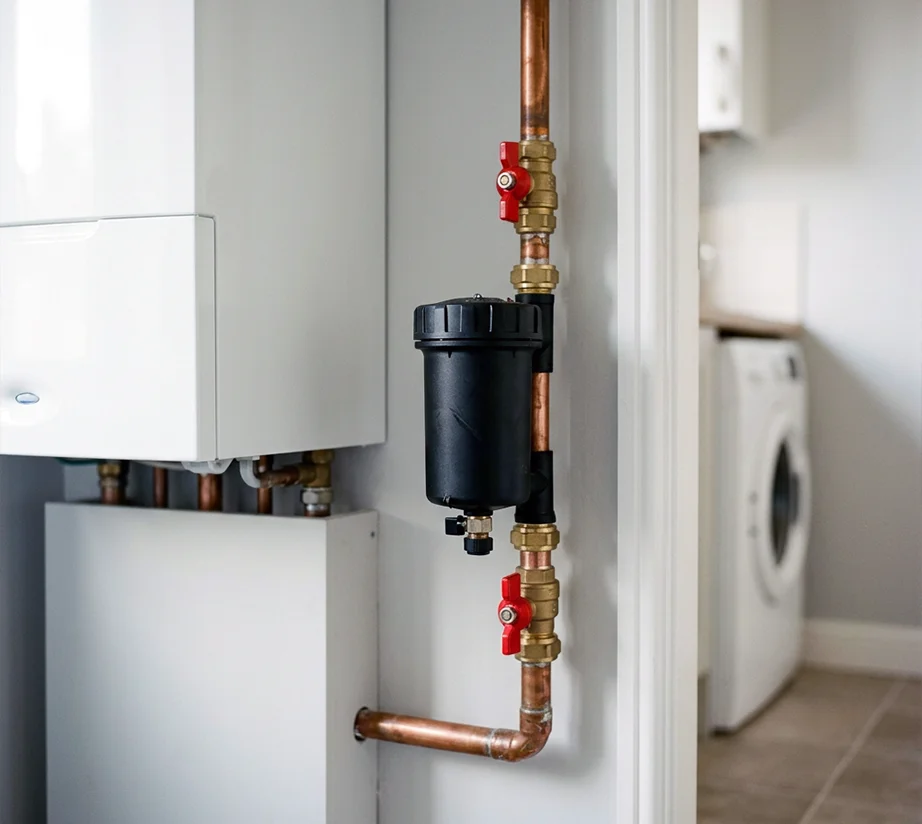
Old boiler systems may have sludge or corrosion debris from many years of operation that will reduce efficiency and damage new boilers.
We suggest having the system cleaned (where applicable) and installing a magnetic filter where possible.
The use of a magnetic filter helps to capture the metal particulate matter circulating through the heating system, protecting your new boiler from potential damage and helping to improve the reliability of the system for years to come.
Boiler Cost & Quote Estimator
See what usually affects boiler cost, installation complexity and the type of quote you are likely to need. We will then use your summary to prepare for a more accurate assessment.
Your project
Guide only. Final boiler and installation cost depends on the system, property, location of the boiler, any upgrades required and the work identified during assessment.
Your quote guide
Boiler installation costs are typically included in the price quoted following an assessment of the work required.
In many cases, you can request a boiler quote online before arranging a home survey.
- Clear boiler quotes
- Transparent pricing
- No hidden charges
Estimate Your Heating Costs
Running costs are a very important factor when making decisions about household energy use. Comparison of your existing boiler with a new energy efficient boiler will help estimate potential heating bills.
Complete Heating offers a free online calculator to help estimate the potential cost of heating and hot water:
👉 https://www.complete-heating.co.uk/free-plumbing-tools/boiler-heating-cost-calculator/
Boiler ErP Rating Guide
Boiler efficiency ratings are an important consideration when selecting a new boiler. Tap a rating or topic below to understand what ErP ratings mean and why efficiency should be considered alongside boiler size, controls and system design.
Boiler ErP Ratings Explained
A-rated boilers
In the UK, boilers are graded using the ErP label, ranging from A - most efficient - to G - least efficient. Most modern boilers from leading manufacturers such as Worcester Bosch are highly efficient A-rated boilers. Choosing an efficient boiler can help save money while improving heating performance.
In the UK, boilers are graded using the ErP label, ranging from A - most efficient - to G - least efficient. ErP stands for Energy-related Products and is used to indicate the energy efficiency of boilers and other heating products under a recognised rating system.
Boiler efficiency ratings are an important consideration when selecting a new boiler. Choosing an efficient boiler can help save money while improving heating performance, which is why efficiency should always be considered alongside the property and the system design.
Most modern boilers from leading manufacturers such as Worcester Bosch are highly efficient A-rated boilers. That makes them a common choice where homeowners want strong efficiency, modern controls and improved overall performance.
Older or less efficient boilers usually waste more energy during operation. That can affect running costs and overall system performance compared with a modern efficient replacement.
A high ErP rating does not automatically mean a boiler is right for every property. Correct sizing, radiator performance, controls, hot water demand and installation quality also matter.
Boiler Noise and Air Quality
Boiler noise has become one of the most commonly reported concerns when it comes to home heating, and specifically for those who have an old boiler installed. Gas and electric boilers today are much quieter than their predecessors were.
Since heat delivery occurs via radiators or under floor piping, boilers do not distribute dust or allergen like many of the forced air heating systems do.

Boiler Controls, Accessories and Warranties
Modern boiler controls like programmers, thermostats and smart controls can provide improved comfort for you and your family and assist in reducing your energy bills.
Dependent upon the condition of your boiler system, we may suggest additional items such as a magnetic filter or thermostatic radiator valves, which could assist in improving the reliability of your boiler system.
Having a boiler warranty will give you peace of mind that you are covered against unforeseen repair bills, and regular service is required to maintain the validity of your boiler warranty.
AVAILABLE THROUGHOUT THE MIDLANDS AND BEYOND
- Alcester
- Alvechurch
- Astwood Bank
- Barnt Green
- Beoley
- Bewdley
- Bournville
- Bromsgrove
- Cotteridge
- Droitwich Spa
- Evesham
- Feckenham
- Hagley
- Henley-in-Arden
- Hollywood
- Kidderminster
- Kings Heath
- Kings Norton
- Longbridge
- Malvern
- Mappleborough Green
- Moseley
- Northfield
- Pershore
- Redditch
- Rednal
- Rubery
- Sambourne
- Shirley
- Solihull
- Stratford-upon-Avon
- Studley
- Stourport-on-Severn
- Tanworth-in-Arden
- Warwickshire
- Worcester
- Worcestershire
- Wythall